
How to Teach Your Dog to Settle Down and Relax on Cue
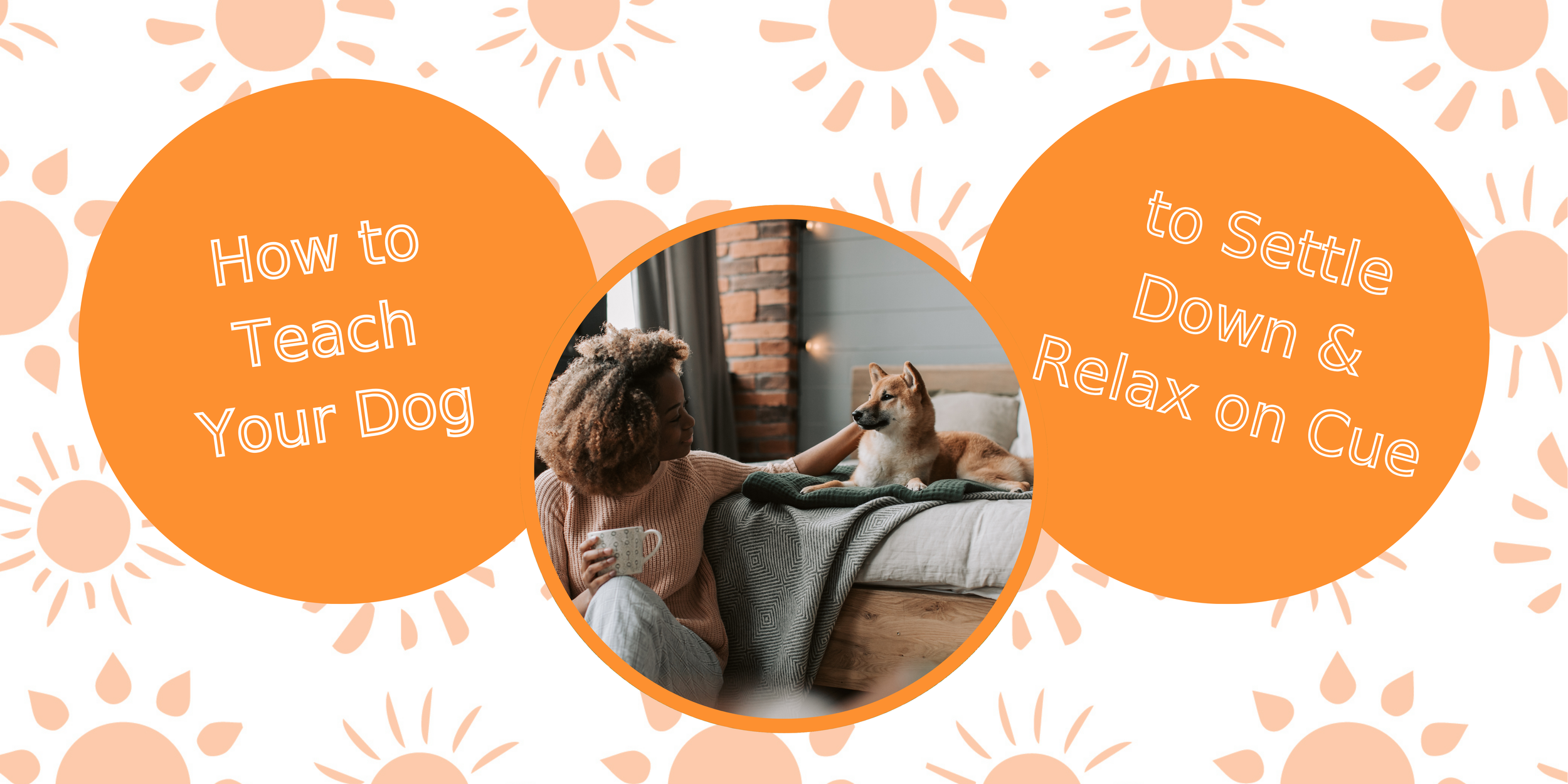
Your dog can't relax; now you can't either.
End this uncomfortable cycle and find relief for both of you by teaching your dog how to settle.
Whether you're dealing with a hyperactive puppy who won't stop bouncing off the walls or an anxious adult dog who paces constantly, the inability to settle creates stress for everyone in your household.
The good news?
Teaching your dog to settle is one of the most valuable skills you can invest in, and it's more achievable than you might think.
H
ere's our proven approach to transforming restless energy into peaceful relaxation, backed by our experience training hundreds of anxious and overstimulated dogs every month.
Why Teaching Puppies and Dogs to Settle Down Is Essential
Using a cue to settle can be used when:
Dogs become overly excited when company arrives,
Greeting family members or strangers
You don't want your dog begging at the table
You have guests visiting.
But the benefits extend far beyond basic manners.
Practical Benefits of the Settle Cue for Dogs and Puppies
Stress Reduction for Everyone: A dog that can regulate their energy in various environments reduces household tension and creates a more peaceful living space for both human and canine family members.
Improved Self-Control: Settle can help teach your dog self-control and can be used to train your dog to settle in various environments, such as when visiting a friend's house, a dog-friendly store, or a veterinary or training facility.
Better Socialization Opportunities: Dogs who can settle are welcome in more places and situations, from outdoor cafes to friends' homes to veterinary visits, where calm behavior makes examinations easier and safer.
Enhanced Focus and Learning: A dog who knows how to settle their mind can focus better during training sessions and is more receptive to learning new skills.
Step-by-Step Guide on Teaching Your Dog to Settle and Relax
Step 1: Build Value in a Relaxed Down Position
Start building your dog's foundation for settling by making the "down" position the most rewarding place to be.
Setup:
Grab your dog's breakfast kibble
Place their bed by the couch (optional if your dog will lay on hard ground)
Put your dog on a leash and sit down
Step on the leash to create hands-free management
The Process:
Take a deep breath and guide or cue your dog into a down position
Mark with a calm "good" and place kibble between their front paws
Deliver 8-10 treats between their front paws, one at a time every 2-3 seconds
Take deep breaths throughout the process
Release them with "find it" and toss a treat away to reset
Key Success Indicator: Repeat until your dog quickly offers a sit or down position after eating the "reset" treat.
Important: Stick to Step 1 for a minimum of 3 separate training sessions before progressing.
Step 2: Reward Natural Settling Behaviors
Once your dog understands the value of the down position, shift to rewarding them for choosing to settle on their own.
Setup: Same context as Step 1 - leash on, step on leash, bed available, you sitting calmly
The Process:
Give your dog about 15 seconds to offer a down position naturally
When they do, mark with a quiet "good" and treat between their front paws
Deliver rewards every few seconds, similar to Step 1
Reset with "find it" and repeat
Progression Tips:
Only treat when your dog offers the down without guidance
Look for signs of true relaxation: head on paws, observing the environment (not staring at you), deep breaths, rolling onto hip or side
Gradually slow treat delivery to every 3-5 seconds as commitment increases
Pro Tip: Reward duration over intensity. It's more effective to reward genuine relaxation behaviors than quick compliance.
Step 3: Generalize the Behavior in Different Locations
Practice Steps 1 and 2 in various locations around your home to help your dog understand that settling applies everywhere.
Training Principle: Think different, not harder.
Recommended Locations:
Your bedroom with no one else around
The garage or basement
The backyard when it's quiet and calm
Different rooms with varying furniture arrangements
Implementation: Start with Step 1 in each new location, then build back to Step 2. Aim for success in at least 3 different contexts before moving to Step 4.
Teaching your dog to settle on different surfaces, such as the floor or grass, and in various environments, including the backyard or at the bus stop, ensures the behavior generalizes properly.
Step 4: Add a Verbal Cue to Your Dog's Settle Training
While not required, a verbal cue can be helpful for specific situations where you need to request settling behavior.
When to Add the Cue: Only after your dog reliably offers settling behavior in multiple contexts.
The Process:
Set up as before: leash, chair, deep breath
Say "settle" calmly just before your dog naturally begins to lay down
When they settle, mark "good" and reward between their front paws
Continue for about 5 repetitions, then reset with "find it"
Practice in different areas to generalize the verbal cue
Training Philosophy: The aim is for dogs to learn for themselves to be calm and to relax. It’s a form of learning that requires your dog to learn to settle without being asked. Both cued and uncued settling have value.
Step 5: Master the Three Ds of Settle Training
Work on Distraction, Duration, and Distance separately before combining training criteria.
This systematic approach prevents overwhelming your dog and ensures solid progress.
Distraction Training
Goal: Teaching your dog to settle despite environmental stimuli
Method: Start with controlled distractions you can manage:
Family members walking around or talking
Gentle sounds like dropping objects
Controlled visitor introductions
Progression: Begin with minimal distractions and gradually increase complexity as your dog succeeds.
Duration Training
Goal: Extending how long your dog can settle and time between rewards
Method: Gradually increase both total settling time and gaps between treats. If your dog becomes restless, you're progressing too quickly.
Distance Training
Goal: Being able to move away from your settling dog
Method:
Tether your dog to something sturdy for safety
Take one step away, return immediately, mark and reward
Gradually build distance over multiple sessions
Don't combine with distractions initially
Troubleshooting: What to Do When Your Dog Won't Settle
Here are the common reasons dogs struggle to settle:
Unmet Physical Needs: A dog that is pent up with energy, hungry, thirsty, or not allowed to use its brain to problem-solve regularly will often struggle to relax. Ensure your dog has adequate exercise and mental stimulation before expecting calm behavior.
Environmental Overstimulation: If your dog becomes unsettled or gets up, ignore them and wait until they settle again before rewarding them. If they won't relax and settle, increase the distance from the distraction or make the distraction less interesting.
Anxiety or Stress: Some dogs may need additional support for underlying anxiety issues that prevent relaxation.
If Your Dog Won't Stay Down:
Return to easier criteria (shorter duration, fewer distractions)
Increase the value of your rewards
Decrease the difficulty of the environment or context that you are asking for the behavior
Ensure basic needs are met before training
Check for medical issues that might cause discomfort
If Your Dog Gets Overexcited:
Use calmer energy in your own body language and voice
Reduce environmental stimuli
Take breaks between training sessions
If Progress Stalls:
Review your criteria - you may be advancing too quickly
Practice in easier environments before challenging situations
Consider whether your dog needs more physical exercise before mental training
Common Mistakes to Avoid When Teaching a Dog to Settle
Mistake #1: Rushing the Process
Problem: Moving to verbal cues or distractions before your dog reliably offers settling behavior.
Solution: Spend adequate time building value in each step before progressing.
Mistake #2: Inconsistent Expectations
Problem: Sometimes allowing excited behavior and sometimes requiring settling.
Solution: Be clear about when settling is expected and consistently reward calm behavior.
Mistake #3: Neglecting Basic Needs
Problem: Expecting a dog to settle when they're under-exercised or overstimulated.
Solution: Meet your dog's physical and mental needs before training sessions.
Mistake #4: Using Punishment for Restlessness
Problem: Getting frustrated and correcting your dog for not settling.
Solution: Focus on rewarding the behavior you want rather than punishing unwanted energy.
Essential Equipment for Settle Training Success
Having the right tools makes training more effective and enjoyable for both you and your dog.
Basic Supplies:
Comfortable dog bed - We recommend the Rollup Camping Dog Bed by GNarbor that's portable and waterproof
High-value treats to increase motivation during the training
Mental enrichment toys for meeting brain exercise needs before training
Frequently Asked Questions About Settle Training
How long does it take to teach a dog to settle?
Most dogs show initial understanding within 1-2 weeks of consistent daily practice. However, reliable settling in various environments typically takes several months of gradual progression through all five steps.
Adult dogs often learn faster than puppies, while anxious or high-energy dogs may need additional time.
When should I use the “settle” cue for dogs?
Use settle when you need your dog to relax in place for extended periods: during meals, when guests visit, in waiting rooms, or when you need to focus on other tasks.
It's different from a formal "stay" because your dog can change positions and doesn't need to maintain rigid attention.
What if my dog won't settle at night?
Evening restlessness often indicates unmet daytime needs. Ensure your dog has received adequate physical exercise and mental stimulation throughout the day.
Some dogs also benefit from a consistent bedtime routine that includes settling practice.
Should I use the settle cue for punishing my dog?
Never use "settle" as punishment or when you're frustrated. This creates negative associations with the cue and undermines your training.
Only practice settling when you and your dog are in a calm, positive state of mind.
Can I teach a puppy to settle?
Yes! Puppies can learn to settle, though they naturally have shorter attention spans and higher energy levels.
Keep training sessions brief (2-3 minutes) and ensure puppy needs for play, socialization, and rest are met.
What's the difference between "settle" and "stay"?
"Stay" means maintaining a specific position until released, while "settle" allows your dog to relax and change positions while remaining in the designated area.
Settle is more about state of mind than precise positioning.
Need Help Teaching Your Dog to Settle in New Places?
Some dogs need additional support to master settling, especially those with anxiety, hyperactivity, or attention challenges.
Consider professional help if:
Your dog shows signs of anxiety or stress during training
Progress stalls despite consistent practice
You're dealing with severe hyperactivity or attention issues
You need help adapting techniques for your specific situation
Our certified dog trainers specialize in helping anxious and overstimulated dogs learn to relax.
We can assess your individual dog's needs and create a customized training plan that works for your lifestyle.